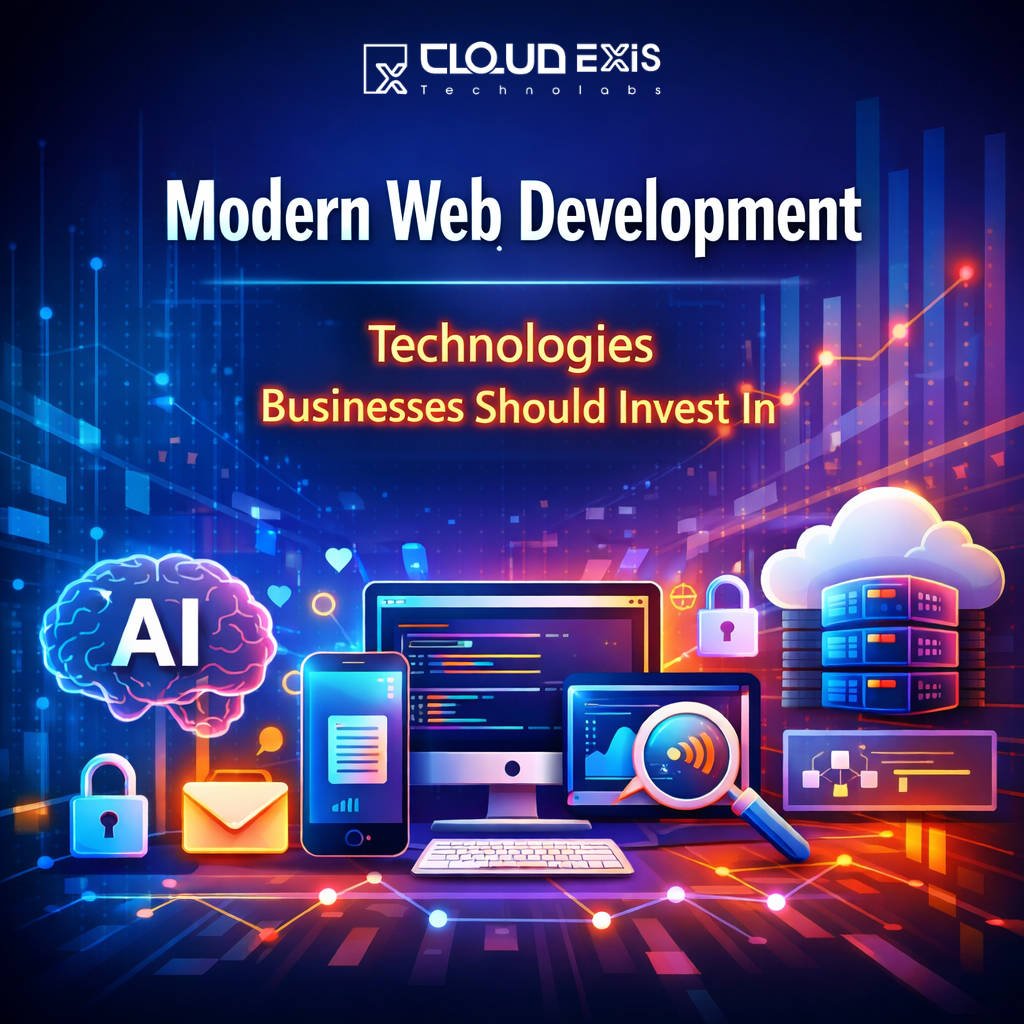
Web development in 2026 isn’t about chasing shiny frameworks. It’s about investing in technologies that make your product faster to ship, easier to maintain, more secure, and smarter with AI without exploding your cost or complexity.
Whether you’re building a SaaS platform, an enterprise portal, a marketplace, an LMS, a healthcare booking system, or an internal operations dashboard, the winning tech decisions in 2026 share one pattern: they reduce friction across the entire product lifecycle from development to deployment, from performance to personalization, and from analytics to automation.
In this blog, we’ll break down the technologies businesses should seriously consider investing in this year, with a clear focus on ROI, scalability, and long-term maintainability.
1) AI-Native UX: From “Features” to “Experiences”
AI in 2026 is no longer a separate module. The best products treat AI as part of the user experience itself, embedded into flows, not bolted on as a chatbot icon.
Where AI is delivering business value right now
Smart onboarding: auto-fill forms, suggest next steps, reduce drop-offs.
Search that works: semantic search + filters + ranking tuned to user intent.
Support deflection: AI answers + ticket summaries + agent assist.
Content and workflows: generate drafts, emails, reports, meeting notes, SOPs.
Personalization: role-based dashboards, recommendations, dynamic UI blocks.
Operational automation: document validation, approvals, routing, follow-ups.
What to invest in
RAG (Retrieval-Augmented Generation): AI grounded on your own data (docs, FAQs, product catalogs, policies, CRM, knowledge base).
Vector databases / embeddings: for search, recommendations, similarity matching.
AI observability: track accuracy, hallucinations, user feedback, cost per response.
Guardrails: permissions, PII redaction, safety filters, audit logs.
Business takeaway: If your product has content, users, or workflows, an AI layer can dramatically improve usability and reduce support costs when built with strong grounding and governance.
2) Modern Frontend: React Ecosystem + Performance-First Architecture
In 2026, businesses care less about “what framework” and more about outcomes: fast UI, SEO, scalability, and developer productivity. The React ecosystem remains strong, especially with modern architecture patterns.
Key priorities for modern frontends
Core Web Vitals and speed
SEO and indexable content
Smooth UX on mobile
Component reusability
Accessible design systems
What to invest in
Next.js (React) for production-grade apps that need SEO + speed + routing.
Server Components + streaming patterns to reduce bundle size and improve time-to-first-render (where applicable).
TypeScript as default for fewer bugs and better maintainability.
Design systems (component libraries + tokens) to ship faster and look consistent.
Business takeaway: If your UI is your product, invest in a performance-first React stack with strong code standards. The ROI is faster releases, fewer UI regressions, and better conversions.
3) Backend That Scales: Laravel + Node.js (and a Clean Architecture)
Backend choices in 2026 should be driven by your product needs:
Fast feature delivery
Secure APIs
Clean integrations
Scalability without rewriting everything
Good developer hiring pool
At Cloudexis Technolabs, we commonly see Laravel and Node.js as strong choices for modern businesses, often even together (Laravel for business logic/admin + Node for real-time services).
What to invest in
Laravel (PHP) for rapid, structured development of SaaS, portals, admin systems, marketplaces, and business apps.
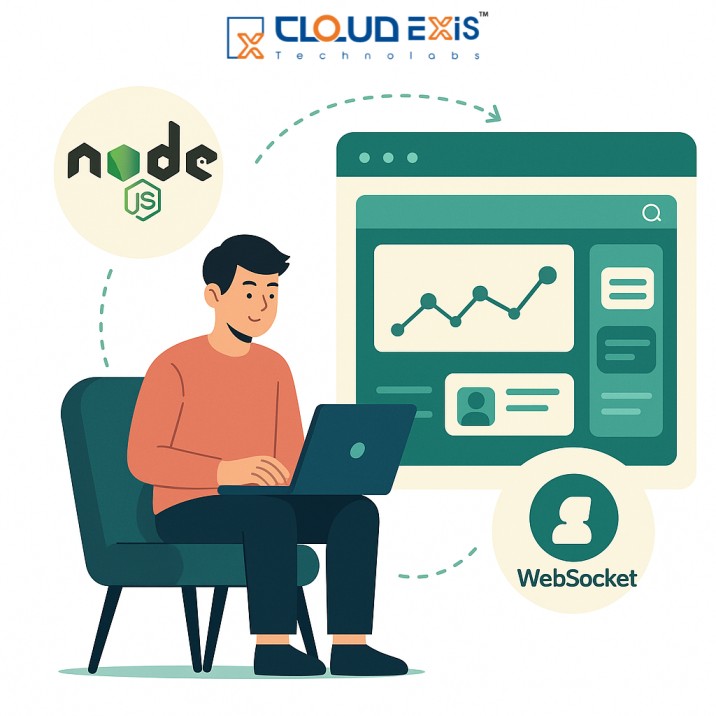
Node.js for real-time features (websockets), microservices, streaming workloads, and fast integration layers.
API-first architecture (REST + OpenAPI docs, or GraphQL where it truly fits).
Clean architecture: modular code, domain-driven thinking, and clear separation of concerns.
Business takeaway: The best backend is the one your team can ship safely and scale confidently. Laravel and Node continue to be high-ROI choices when architected cleanly.
4) Hybrid Mobile + Web: Build Once, Ship Everywhere
Businesses don’t want to maintain separate codebases unless there’s a clear reason. That’s why hybrid development keeps growing, especially when paired with a strong backend.
What to invest in
Flutter for high-quality cross-platform mobile apps with consistent UI.
React Native for teams already strong in React.
PWA (Progressive Web Apps) for web-first products that want app-like experiences without app store friction.
Where it fits best
Booking platforms, delivery systems, CRMs, field operations apps, marketplaces, internal tools, and membership portals.
Business takeaway: If you’re planning mobile in 2026, hybrid is often the fastest path to ROI without compromising user experience (when built properly).
5) Cloud + DevOps: Build for Reliability, Not Just Deployment
In 2026, downtime is expensive, slow releases kill momentum, and security is non-negotiable. Businesses need infrastructure that supports rapid releases without chaos.
What to invest in
Docker + containerized deployments for consistency across environments.
CI/CD pipelines (GitHub Actions, GitLab CI, etc.) for predictable releases.
Infrastructure as Code for repeatable environments.
Observability: logs, metrics, tracing so you can debug production fast.
Auto-scaling strategies and reliable backups.
Business takeaway: Strong DevOps practices reduce bugs, speed up releases, and make your product resilient. This is one of the highest ROI investments you can make.
6) Cybersecurity by Design: Because Trust Is the Product
Security isn’t optional anymore, especially for B2B SaaS, healthcare, fintech, and any platform managing user data.
What to invest in
Secure authentication: OAuth, SSO, MFA where relevant.
Role-based access control (RBAC) with audit logs.
Data encryption at rest and in transit.
Rate limiting and bot protection
Secure coding practices + regular vulnerability scanning.
Business takeaway: Investing early in security saves you from expensive fixes, reputation damage, and compliance headaches later.
7) Data & Analytics: From “Tracking” to “Decision Systems”
Modern products need more than pageviews. You need actionable analytics tied to business outcomes.
What to invest in
Product analytics: funnels, retention, cohorts, feature usage.
Event-driven tracking: user actions, conversions, drop-offs.
Data pipelines (even lightweight ones) to bring data into one place.
AI + analytics together: summaries, insights, anomaly detection, forecasting.
Business takeaway: If you can’t measure what users do, you can’t improve your product. Analytics is not optional. It’s how you grow.
8) Headless CMS + Content Ops: Scale Your Marketing Without Rebuilding
If content is part of your business (blogs, landing pages, help docs, product updates), you need a content system that doesn’t require developers for every small edit.
What to invest in
Headless CMS (like Strapi-style architecture) to manage content independently.
Composable architecture: content + product + data in one experience.
SEO-friendly rendering: fast pages, structured metadata, schema markup.
Business takeaway: A headless approach lets marketing move faster while engineering stays focused on product development.
9) API Integrations: The Competitive Advantage Nobody Talks About
In 2026, most products win by integrating well:
CRMs
Payment gateways
Communication platforms (WhatsApp, email, SMS, voice)
Calendars
ERPs
Marketing automation
Identity systems (SSO)
What to invest in
Integration-ready architecture (webhooks, job queues, retry logic)
Event-driven systems for reliability
Queue-based processing for heavy operations (emails, exports, syncs)
Business takeaway: The best product isn’t always the one with the most features. It’s the one that fits smoothly into a customer’s existing tools.
10) Real-Time Features: Faster Decisions, Better Engagement
Real-time is becoming standard in SaaS and operations platforms: live tracking, instant updates, notifications, collaboration, and dashboards.
What to invest in
WebSockets or real-time messaging
Push notifications (where needed)
Real-time dashboards and activity feeds
Business takeaway: Real-time updates reduce user friction and improve engagement, especially in operations, booking, logistics, CRM, and marketplaces.
How to Choose the Right Tech Stack in 2026 (Without Overthinking)
Here’s a simple decision framework we use at Cloudexis Technolabs:
Choose based on:
Time-to-market: Can you launch fast without messy hacks?
Team capability: Can your team maintain it for 2–3 years?
Scalability needs: Do you need enterprise scale now or later?
Security & compliance: Does your domain demand strict controls?
Integration complexity: Will you connect with multiple tools?
User experience: Does it feel fast and reliable on mobile?
Avoid these mistakes:
Building microservices too early (complexity tax is real)
Ignoring analytics until “later”
Treating AI like a plugin instead of a product experience
Skipping DevOps and security basics
Choosing tech because it’s trending, not because it fits
Final Thoughts: Invest in “Business-Speed” Technology
Modern web development in 2026 is not about building the fanciest system. It’s about building a product that:
loads fast,
converts better,
integrates easily,
scales smoothly,
stays secure,
and uses AI intelligently.
The best investments are the ones that reduce friction for users and your team.
If you’re planning a new product or modernizing an existing one, Cloudexis Technolabs can help you define the right architecture, build a clean roadmap, and ship with confidence across web, mobile, and AI. Lets connect